
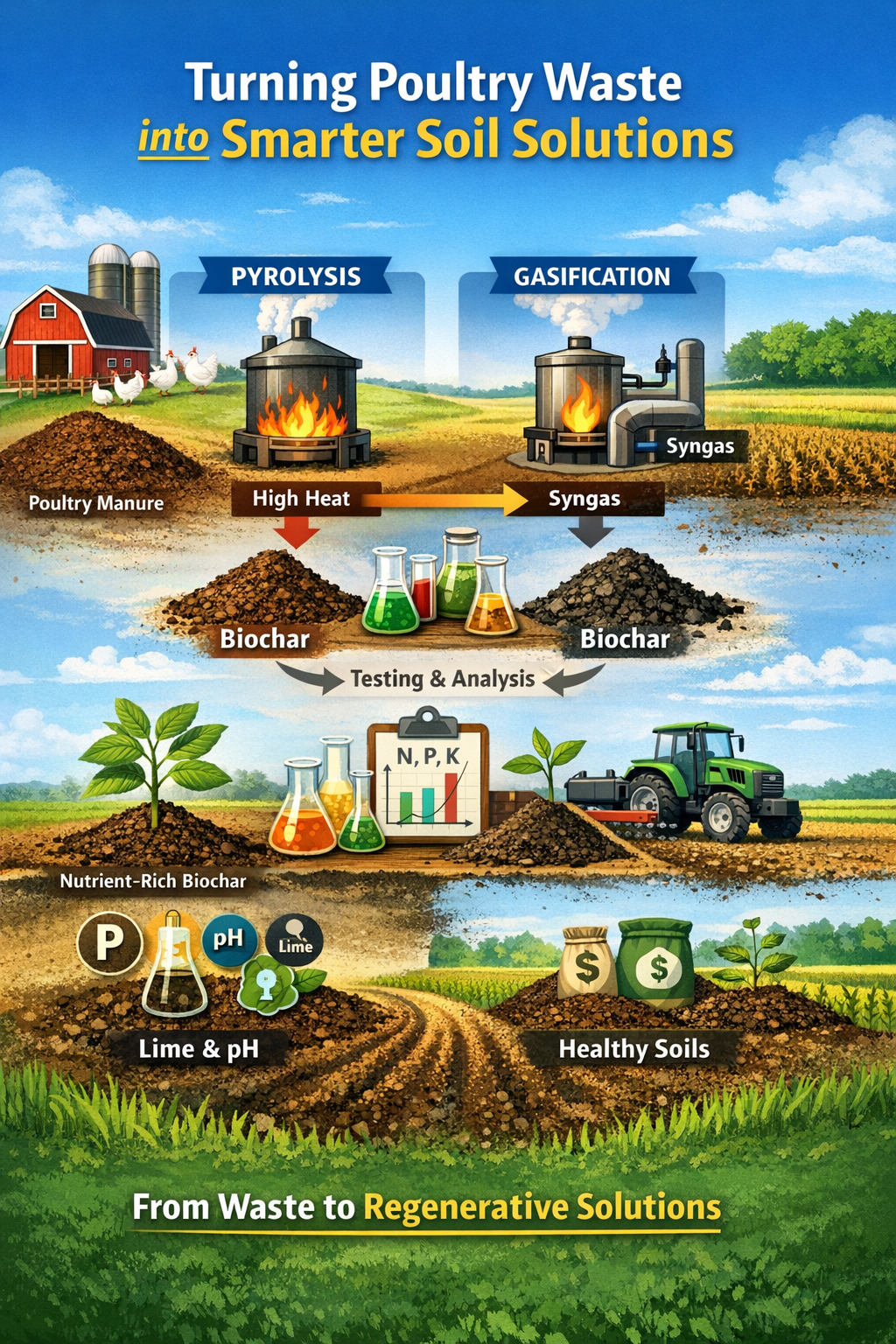
In 2026, AgroNet ZERO partnered with Purdue University through the Applied Research Institute (ARI) to explore how poultry manure can be transformed into high-value soil solutions.
Our project focuses on one of the most abundant agricultural waste streams: poultry manure.
Using advanced thermal processing methods — pyrolysis and gasification — we are evaluating how different production pathways influence the performance of biochar as a soil amendment and potential fertilizer replacement.
What We Did
During this phase of the project, we focused on building the scientific and practical foundation for biochar validation. Specifically, we:
- Reviewed existing research on poultry-manure biochar produced through pyrolysis and gasification
- Analyzed how production conditions (temperature, processing method) impact nutrient content and stability
- Defined key variables such as feedstock type (pullet, layer, composted manure) and processing parameters
- Developed an experimental design framework aligned with real-world production conditions at Minnich Eggs
- Established target performance metrics related to nutrient availability, pH, and fertilizer-replacement potential
What We Learned
- Poultry manure can produce nutrient-rich biochar, particularly high in phosphorus and with strong liming potential
- Production method matters: pyrolysis and gasification create different nutrient profiles and material characteristics
- Feedstock variability (e.g., manure type and moisture) significantly influences final biochar properties
- Biochar performance depends on a combination of production conditions, feedstock composition, and chemical and physical characteristics
- Designing effective biochar products requires aligning how it's made with how it will be used in the field
Why It Matters
This research is a critical step toward a future where:
- Agricultural waste streams are transformed into valuable, scalable soil inputs
- Farmers can reduce reliance on synthetic fertilizers through targeted nutrient solutions
- Biochar products are designed and produced with specific agronomic outcomes in mind
Ultimately, this work supports AgroNet ZERO's mission to build a decision-driven marketplace for regenerative inputs, where science, data, and real-world application come together to help farmers apply the right inputs, in the right place, for the right outcome.

Written by
Tetiana McLemore, PhD